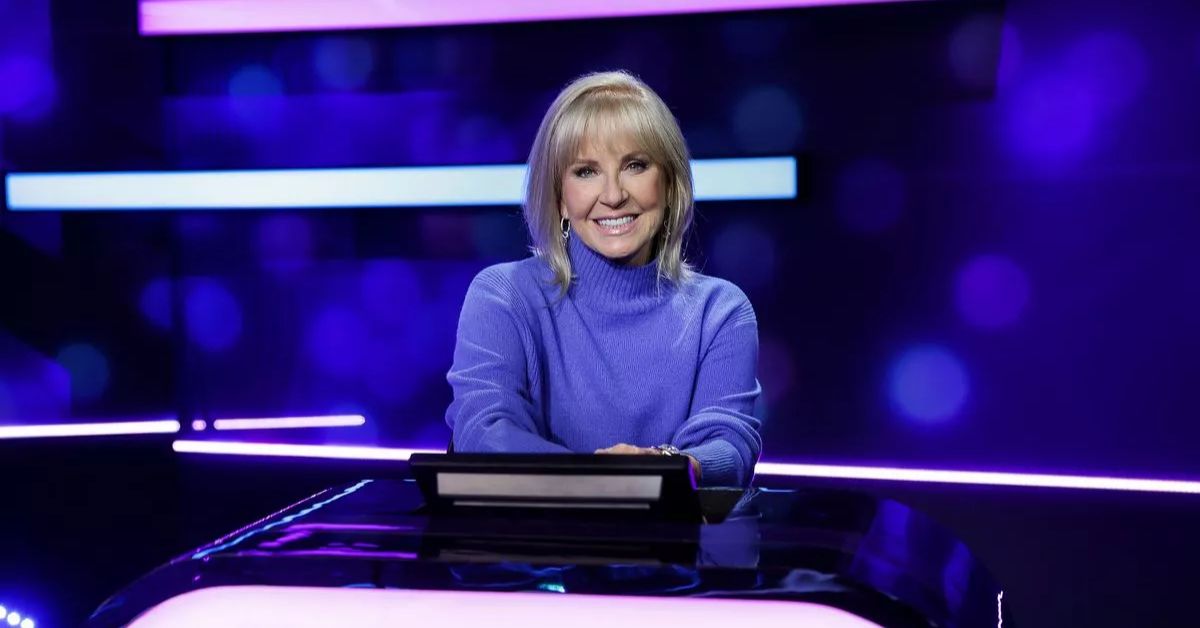
In the high-velocity, algorithm-driven landscape of modern broadcasting, few narratives are as compelling—or as misunderstood—as the current positioning of Sarah Greene. While the tabloid press continues to mine the depths of her 1988 helicopter accident and personal bereavements for engagement, a far more sophisticated story is unfolding within the corridors of BBC Daytime. Greene’s role in the recently confirmed third series of The Finish Line is not a sympathy play; it is a masterclass in intergenerational casting and regional production strategy. As the industry pivots toward "comfort television" to combat streaming fragmentation, Greene has emerged not merely as a nostalgic figurehead, but as the emotional ballast for one of the BBC’s most promising franchise bets out of Belfast. This is an analysis of resilience as a commercial asset, and how a veteran broadcaster is rewriting the rules of the daytime comeback.
The Tabloid Trap vs. Professional Reality
To understand the current discourse surrounding Sarah Greene, one must first dismantle the "trauma trap" frequently set by the British tabloid press. Recent headlines, including feature pieces in outlets like OK!, have framed Greene’s narrative almost exclusively through the lens of her survival—revisiting the harrowing 1988 helicopter crash with her late husband Mike Smith, and her subsequent widowhood in 2014.
While these events are undeniably foundational to her public persona, the editorial framing suggests a fragility that is entirely absent from her actual professional output. The "Deep Intelligence" on her current standing reveals a stark contradiction: while the press sells a story of a woman defined by past struggle, the BBC has deployed a broadcaster operating at peak efficiency.
There is no new illness. There is no crisis. There is only a seasoned professional who has quietly become the lynchpin of a high-energy quiz format. The tension lies between the media's desire for a "victim-to-hero" arc and the industry’s reliance on her as a "safe pair of hands." Greene is not returning to TV to be pitied; she is returning to stabilize a format that requires the specific, unflappable authority that only a Blue Peter alumna can provide.
The 'Safe Pair of Hands' Strategy
The commissioning of Series 3 of The Finish Line, produced by Potato (ITV Studios) and Nice One Productions, signals a significant vote of confidence from BBC Daytime commissioners Alex McLeod and Rob Unsworth. However, the casting dynamic is where the true strategic genius lies.
By pairing Greene with Roman Kemp, the BBC has executed a textbook "intergenerational bridge." Kemp brings the energy of the Capital FM demographic and the social media reach required for modern discovery. Greene, conversely, brings the "BBC DNA"—a sense of propriety, warmth, and institutional trust that appeals to the core daytime demographic.
This is a deliberate hedge against the volatility of modern talent. In an era where younger presenters can be polarizing, Greene acts as a cultural anchor. She de-risks the format. Her presence legitimizes the show for viewers who remember Going Live!, effectively granting permission for a legacy audience to engage with a new, fast-paced format. It is a casting architecture designed to maximize reach across the age spectrum, turning a standard quiz show into a vehicle for cross-generational viewing.
Belfast: The Economics of the New Quiz Hub
Beyond the talent dynamics, Greene’s residency on The Finish Line places her at the center of a major shift in UK production infrastructure. The show is not filmed in London, but in Belfast, Northern Ireland. This is not incidental.
Industry intelligence confirms that The Finish Line is a cornerstone of Northern Ireland Screen’s strategy to establish Belfast as a global "studio quiz hub." Chris Jones, founder of Nice One Productions, has explicitly framed the show’s success as proof of concept for the region’s capacity to handle high-volume, quick-turnaround studio formats.
Greene’s willingness to commit to the Belfast production schedule is a critical component of this ecosystem. For regional hubs to thrive, they require talent willing to travel and work intensively. Greene’s role, therefore, is not just creative; it is economic. She is part of the human infrastructure allowing the BBC to meet its "Across the UK" mandate, shifting investment away from London while maintaining network-quality output.
Timeline: A Career in Resilience
To fully appreciate the weight Greene carries on screen, one must view her current role not as a postscript, but as the latest chapter in a continuum of high-stakes broadcasting.
-
1980–1983: The Blue Peter Foundation
Greene becomes the youngest ever presenter at age 22. This era cements her status as "national property," instilling the live-TV discipline that currently anchors The Finish Line. -
1988: The Interruption
The defining tragedy—a helicopter crash in Gloucestershire with Mike Smith. Both are critically injured. Her return to Going Live! while still in a cast remains one of the most memorable moments of 80s television, establishing her brand of stoic resilience. -
2014: The Bereavement
The death of Mike Smith marks a retreat from high-profile consistency, transitioning her into a period of guest spots and charitable ambassadorship (Target Ovarian Cancer). -
2023–2025: The Renaissance
Greene returns to daily daytime TV as the co-host of The Finish Line. The show is recommissioned for Series 2 and 3, validating her status as a ratings driver in the 2020s.
The Aesthetics of Comfort: An Anti-Influencer Narrative
From a cultural perspective, Sarah Greene’s resurgence taps into a broader aesthetic trend: the rejection of the over-curated. In a visual landscape dominated by filtered influencers and reality TV stars engineered for virality, Greene represents "authenticity" in its most traditional form.
She does not chase trends. Her styling on The Finish Line—classic, tailored, approachable—mirrors her presenting style. There is a distinct lack of desperation in her performance. She is not fighting for screen time against Roman Kemp; she is facilitating it. This "Anti-Influencer" stance is precisely what makes her modern. She offers a visual and emotional reprieve from the frantic energy of digital culture.
For FAZ Fashion readers, the takeaway is clear: True style in the media age is about consistency and command. Greene’s brand equity has not been diluted by her time away; it has been calcified. She is a luxury heritage brand in a market of fast fashion.
Future Forecast: The Nostalgia Dividend
Looking ahead, the trajectory for Greene and The Finish Line appears robust. The confirmation of Series 3 suggests the BBC has found a format capable of becoming a long-running workhorse, similar to Pointless or The Chase.
We predict the BBC will further leverage Greene’s "nostalgia dividend." Expect to see her deployed not just in quizzes, but in upcoming anniversary programming and potentially as a deeper anchor for charitable telethons. The "illness" narrative pushed by the tabloids will likely fade as the consistency of her on-screen work overrides the historical drama.
The danger, however, remains in the framing. If the media continues to treat her solely as a survivor, they miss the point. Sarah Greene is a thrive-er. She is a working asset in a billion-pound industry, proving that in television, the most valuable commodity isn't youth—it's competence.
Expert Insights
The industry consensus supports this bullish view on Greene’s positioning.
Chris Jones, Nice One Productions:
“The Finish Line delivers more quick-fire questions... Making series 3 was a joy and underlines Belfast’s potential as a studio quiz hub.”
This statement confirms that the show is an industrial asset, with Greene as a key operator within that machinery.
Sarah Greene (Official Statement):
“The speed, suspense and surprises are all there... A fully supercharged quiz for our fabulously supercharged contestants.”
Note the language. She speaks to the energy of the show, directly countering the "frail survivor" narrative found in the tabloids.
Sarah Greene’s return is not a miracle recovery; it is a successful business strategy. For the BBC, she is the bridge between the past and the future of daytime television.
Written by Ara Ohanian for FAZ Fashion — fashion intelligence for the modern reader.