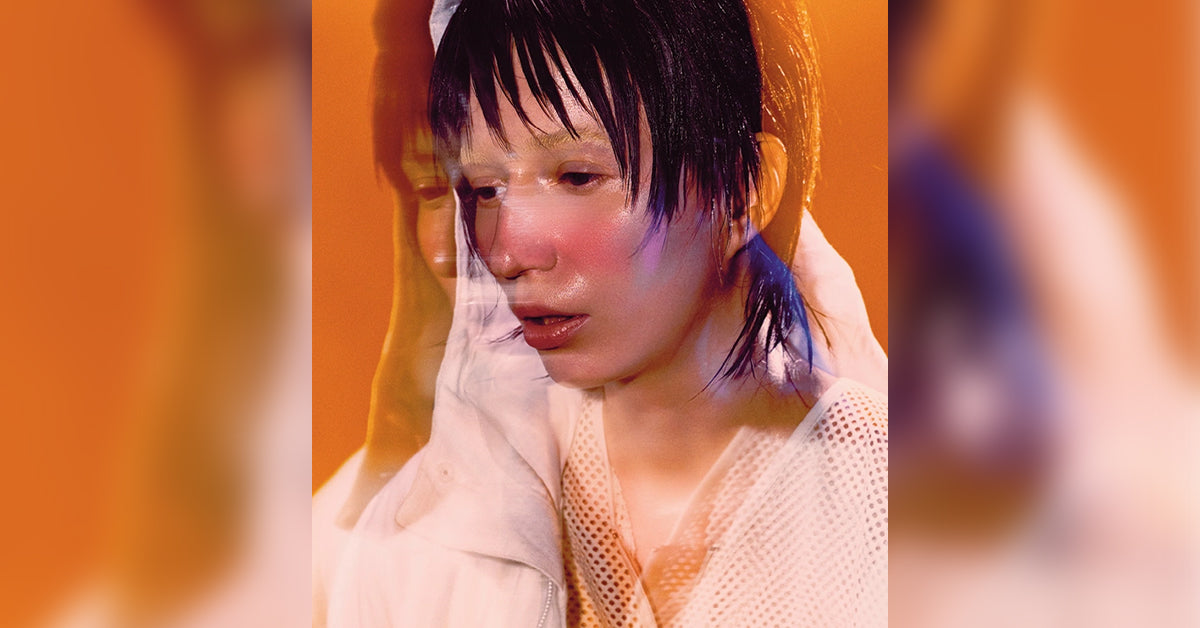
The era of "summer dressing" is effectively over; the age of heat adaptation has begun. In a sweltering intersection of climate science, high design, and urban survivalism, Vogue Singapore and brand practice Anak have unveiled “HOT BODIES: A Heatwear Exhibition.” Running from December 6 to 28, 2025, at New Bahru, this is not merely a showcase of lightweight linens or resort collections. It is a provocative, first-of-its-kind declaration that clothing must now serve as critical infrastructure for the human body. As global temperatures shatter records and the tropics become the front line of the climate crisis, this exhibition signals the formal birth of "Heatwear"—a new category destined to rival athleisure in market dominance, shifting the industry’s focus from aesthetic escapism to systemic resilience.

The Pivot: From Styling to Survival
For decades, the fashion industry’s response to rising temperatures has been remarkably superficial: shorten the hemlines, lighten the fabrics, and sell the fantasy of an endless European summer. However, the data emerging from the Meteorological Service Singapore—citing the last decade as the hottest on record—paints a picture that renders the "vacation aesthetic" obsolete. The "HOT BODIES" exhibition confronts a starker reality: our planet is heating faster than our clothing culture is evolving.
Curated by Hanyi Lee of Anak, with the institutional weight of the DesignSingapore Council and the SG Eco Fund, the exhibition frames heat not as a temporary inconvenience, but as a permanent environmental condition that requires a new design vernacular. The central tension here is palpable. While the Global North still treats extreme heat as a freak weather event, the equatorial belt is innovating out of necessity. By positioning Singapore as a "testbed" for humid living, the organizers are effectively flipping the fashion capitals map—suggesting that the future of functional design will not come from the temperate studios of Paris or Milan, but from the sweat-drenched streets of Southeast Asia.
The terminology itself is a strategic masterstroke. By coining "Heatwear," Anak and Vogue are attempting to formalize a fragmented sector of cooling vests, UV-protective gear, and moisture-wicking textiles into a cohesive, desirable lifestyle category. It is a move to legitimate adaptation gear, transforming it from uncool, utilitarian techwear into an aspirational necessity for the climate-conscious urbanite.

Inside the Exhibition: A New Design Language
Hosted at the School Hall in New Bahru, a creative cluster housed in a repurposed school, the exhibition moves beyond theoretical gloom to offer tangible, often playful solutions. The curation features ten commissioned pieces from international and local creatives, each tackling a specific facet of thermal discomfort—humidity, UV radiation, and body temperature regulation.
The standout pieces illustrate the spectrum of this new category, ranging from the hyper-functional to the speculative:
The Sunshell by Jean Jullien: The renowned French graphic artist brings a distinct sense of whimsy to the apocalypse. His contribution is a UPF 50 cape that reinterprets sun protection. Historically, protective clothing has been clinical or sporty; Jullien’s cape is character-driven and graphic, suggesting that shielding oneself from UV rays can be an act of joy rather than fear. It challenges the grim aesthetic usually associated with climate resilience.
The Cool Collar by TANCHEN Studio: This Singaporean textile practice creates a dialogue between ancient wisdom and modern design. Utilizing jade—a material historically prized in Chinese culture for its cooling properties—the collar serves as a wearable heat sink. It is a sophisticated nod to the fact that "smart textiles" do not always require batteries or synthetic polymers; sometimes, material intelligence is geological.
The Hardwear Jacket by TMS.SITE: Perhaps the most industrially relevant piece in the collection, this jacket from the Hong Kong-based studio addresses the most vulnerable demographic: outdoor workers. While luxury fashion frets over comfort, this piece acknowledges the labor force that keeps cities running under punishing sun. It hints at a future where "Heatwear" is not just a consumer luxury but a regulatory requirement for occupational safety.
The Self-Conditioner by HARRI: London-based designer HARRI, known for his latex inflatable trousers made famous by Sam Smith, contributes a self-cooling cocoon. It is speculative fashion at its finest—visualizing a future where we carry our own microclimates. While less immediately wearable than a cooling collar, it serves as a powerful visual metaphor for the isolation of extreme heat, where the wealthy may eventually move through the world in hermetically sealed personal environments.

The Experience Economy: Shoppable Climate Resilience
What distinguishes "HOT BODIES" from a typical museum retrospective is its aggressive embrace of retail theater and the experience economy. The organizers understand that to normalize a new category, one must make it shoppable. The inclusion of an "Emporium" transforms the theoretical into the transactional.
The "Sunscreen Bar," boasting over 80 products in partnership with Paula’s Choice, and a dedicated "Hydration Bar," signals a convergence of industries. Fashion is no longer standing alone; it is merging with beauty, wellness, and nutrition to create a holistic "heat defense" stack. This is a critical insight for investors and marketers: the consumer of the future will not just buy a dress; they will buy a thermal management system that includes SPF, electrolytes, and cooling apparel.
Furthermore, the event’s programming—ranging from "Sun Hero" face paint parties to Traditional Chinese Medicine (TCM) workshops—softens the blow of climate anxiety. It reframes adaptation as a communal, lifestyle-driven activity. This is "climate experience design," a growing field where education regarding planetary limits is delivered through the dopamine hits of retail and social media moments. The presence of a dedicated Instagram handle (@hotbodies.tmr) and UGC-friendly installations confirms that the goal is viral dissemination: making "heat resilience" a status symbol.
Strategic Implications for the Fashion Industry
The implications of this exhibition extend far beyond a three-week run in Singapore. For industry executives, "HOT BODIES" serves as a bellwether for several macro-trends that will define the next decade of apparel.
1. The Rise of the "Equatorial Standard"
For a century, global fashion standards have been dictated by the four seasons of the West. "Heatwear" challenges this hegemony. As global warming pushes temperate zones into subtropical climates, the innovations developed in Singapore will become relevant in Southern Europe, the American South, and Australia. Brands that ignore the specific material requirements of high humidity do so at their own peril.
2. New Material Supply Chains
The pieces on display rely heavily on performance. This points toward a supply chain pivot away from heavy cottons and towards technical blends, jade-infused yarns, and phase-change materials. However, this raises a new investigative angle: the tension between sustainability and synthetics. Many cooling fabrics rely on fossil-fuel-derived polymers. The industry must grapple with the irony of fighting heat (caused by carbon emissions) with polyester (made from carbon emissions).
3. Regulatory Fashion
The inclusion of worker-focused gear suggests a B2B future for Heatwear. We are likely approaching a regulatory horizon where governments mandate specific thermal ratings for construction and delivery uniforms. Fashion brands that can navigate these technical specifications stand to capture massive institutional contracts.
Timeline: The Evolution of Heatwear
- Pre-2020s: Singapore and other tropical nations rely on "Tropical Modernism" in architecture and imported "Summer" fashion collections that fail to address high humidity.
- 2015–2025: The "Hottest Decade on Record." Acceleration of extreme heat events globally. Niche techwear brands begin experimenting with cooling vests, mostly for industrial or military use.
- September 2025: "HOT BODIES" previews during Singapore Design Week, testing the concept of heat-focused design as a cultural pillar.
- December 6, 2025: The exhibition opens at New Bahru. Vogue Singapore and Anak formally coin and brand the category "Heatwear."
- 2026 & Beyond: Projected expansion of Heatwear into mainstream retail. Luxury brands expected to integrate cooling technology into Resort collections; mass retailers to launch dedicated "Heat Tech" summer lines.
Forecast: What Happens Next?
We are witnessing the early adoption phase of what will likely become a ubiquitous standard. Just as "waterproof" became a standard feature for outerwear, "thermal regulation" will become a standard claim for everyday apparel. Expect to see the "Heatwear" tag moving from exhibition halls to the hang-tags of major retailers within 24 months.
Culturally, we are moving toward "Adaptation Aesthetics." The visual language of climate change is shifting from images of starving polar bears to images of stylish urbanites wearing cooling collars and UV capes. This aestheticizing of anxiety is controversial, but it is also a powerful mechanism for normalization. If Vogue says wearing a cooling suit is chic, the barrier to adoption collapses.
Ultimately, "HOT BODIES" proves that the fashion industry can be more than a villain in the climate narrative. By pivoting to adaptation, it can provide the tools we need to inhabit a hostile planet. The question remains: will these solutions be accessible to the masses, or will thermal comfort become the ultimate luxury good?