
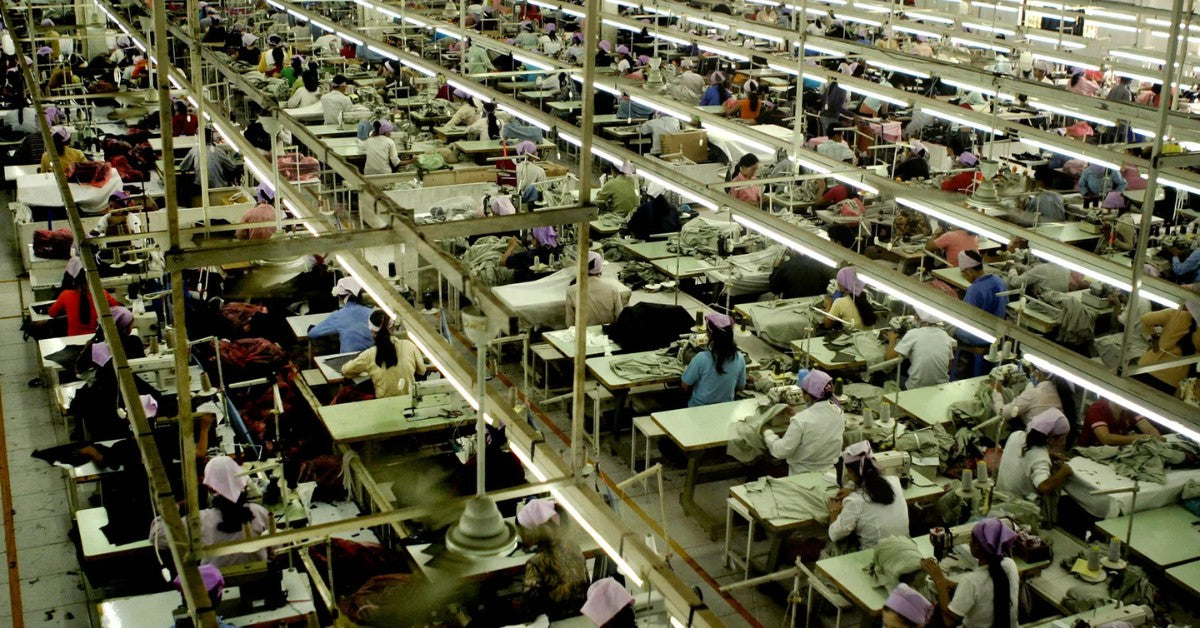
The notion that tariffs could successfully repatriate U.S. fashion production—reinvigorating domestic factories and reshaping global supply networks—has long circulated among policymakers and industry leaders. Yet, the latest 2025 Fashion Industry Benchmarking Study by the U.S. Fashion Industry Association draws a bold line under a stark reality: tariffs, particularly those levied under the Trump administration, have not swayed American fashion brands toward “Made in the USA.” Instead, a labyrinth of trade uncertainty, investment hurdles, and entrenched global infrastructure continues to shape how and where U.S. fashion is made.
Tariffs: The Unintended Consequence for U.S. Fashion
The promise of tariffs as a lever for economic nationalism rests on a deceptively simple premise: make imports costlier, and domestic production will blossom. However, the USFIA’s 2025 study—surveying 25 leading fashion companies between April and June—finds “no clear evidence” that tariff policies have caused a significant pivot toward domestic sourcing.
Every company surveyed expects higher tariff and trade barrier costs in the year ahead. In fact, around 70% reported that they had delayed or outright canceled sourcing orders in response to tariff hikes. But rather than embracing U.S. manufacturing, most brands have turned instead to a strategy of procurement network adjustment—diversifying their production footprint across other countries and regions. More than 80% of respondents indicated their intention to expand sourcing beyond traditional Asian hubs.
Where Are Sourcing Strategies Shifting?
The study reveals a nuanced picture of how U.S. fashion companies are recalibrating their sourcing strategies in the face of trade turbulence:
- 44% of respondents plan to expand sourcing from the Western Hemisphere, including Latin American partners.
- 17% intend to source more apparel and textiles labeled “Made in the USA.”
- About 40% of surveyed brands currently source goods from the U.S.—a figure unchanged since last year.
This data exposes a persistent hesitancy to embrace domestic production, even as tariffs complicate traditional Asian supply chains. The “Made in the USA” label remains an aspiration for less than a fifth of respondents, with the majority seeking alternatives elsewhere.
Why U.S. Apparel Production Is Struggling to Compete
Delving deeper into the report, the rationale for this reluctance becomes clear. Sheng Lu, a professor at the University of Delaware’s department of fashion and apparel studies and author of the benchmarking study, offers a critical insight: “Higher tariffs can directly disadvantage U.S.-based production. A U.S. company may manufacture the clothes here, but use yarns, fabrics, and zippers from other countries. When tariffs drive up the cost of these raw materials, it reduces the price competitiveness of apparel ‘Made in the USA.’”
The import-intensive nature of U.S. apparel manufacturing means punitive tariffs often backfire, inflating costs for domestic producers rather than shielding them from global competition. The result is a paradox where efforts to protect local industry instead erode its competitiveness.
Asia’s Enduring Dominance—and the New Sourcing Map
Despite mounting trade barriers, Asia remains the heart of U.S. apparel sourcing. While many brands have slashed their exposure to China, aiming for low single-digit percentages, nations like Vietnam, Bangladesh, Cambodia, and Indonesia are increasingly attractive. The agility, product diversity, and vertical integration offered by Asian suppliers continue to outpace domestic alternatives—key differentiators in today’s volatile trade climate.
U.S. suppliers, by contrast, are perceived as lacking in several critical dimensions:
- Product diversity
- Operational agility
- Flexibility in order volume and turnaround
- Vertical integration, from raw materials to finished goods
These deficits are not merely operational—they are strategic. In a world where trend cycles accelerate and supply chain disruptions loom, brands need partners who can pivot quickly and offer a breadth of capabilities. U.S. production, hampered by its relatively small scale and fragmented infrastructure, remains on the margins.
Domestic Textile Production: A Sector Under Strain
The state of U.S. textile manufacturing further complicates the picture. Between January and July, production of textiles (fibers, yarns, fabrics) decreased by 6.2%, while apparel production fell by 4.3%. These declines underscore a broader malaise: the U.S. textile sector is struggling not only to grow, but to maintain its current foothold.
Lu’s assessment is unequivocal: “There is no evidence that hiking tariffs has benefited U.S. domestic textile and apparel production.” The shrinking pool of orders for U.S.-based manufacturers—who account for less than 10% of a typical fashion company’s sourcing footprint—exposes the limited impact of protectionist policies.
Even within the Western Hemisphere, where U.S. yarn and fabric exports have traditionally played a vital role, the story is one of contraction. Exports to key partners, including Mexico and members of the Dominican Republic-Central America Free Trade Agreement, dropped by 8% to 10% in the first five months of the year. This slowdown trickles through the entire regional supply chain, weakening garment exports from those countries and signaling a broader shift away from U.S.-origin textiles.
The Sustainability Paradox: Domestic Sourcing’s Green Aspirations
Amid calls for greater environmental responsibility, U.S. fashion brands have shown interest in sourcing apparel made from recycled, organic, or regenerative materials domestically. Yet this ambition collides with infrastructural realities. Most companies are likely to source sustainable textiles in the U.S., but new investments are urgently needed to boost production capacity and make green sourcing a viable, scalable option.
In effect, the sustainability imperative is outpacing the industry’s ability to deliver. Without robust infrastructure upgrades, domestic suppliers will struggle to meet the growing demand for eco-friendly fashion—leaving brands with difficult choices between sustainability goals and sourcing realities.
Long-Term Solutions: Beyond Tariffs to Innovation and Investment
The findings of the USFIA study point toward a compelling conclusion: to truly support “Made in the USA,” U.S. trade policy must look beyond punitive tariffs and embrace long-term strategies that foster innovation and investment. As Lu puts it, “U.S. trade policy needs to go beyond punitive tariffs and focus on long-term strategies that encourage innovation and investment at home.”
This means:
- Investing in advanced manufacturing and automation to drive competitiveness
- Supporting supply chain vertical integration domestically
- Expanding product diversity and agility among U.S. suppliers
- Building sustainable infrastructure for eco-friendly textile production
Without such measures, the U.S. apparel sector will remain hamstrung by high costs, limited capabilities, and shrinking market share.
Conclusion: The Future of U.S. Fashion Sourcing
The 2025 Fashion Industry Benchmarking Study delivers a sobering verdict on the efficacy of tariffs in reshaping U.S. fashion sourcing. Rather than catalyzing a domestic renaissance, trade barriers are prompting brands to diversify globally—often away from China, but rarely toward U.S. factories. The challenges facing domestic suppliers are systemic: insufficient product diversity, outdated infrastructure, and a lack of integration make the U.S. less competitive than its Asian counterparts.
If the dream of “Made in the USA” is to become reality, policymakers and industry leaders must pivot from short-term fixes to visionary investment. Only then will American fashion reclaim its place not just as a label, but as a force in global sourcing. For now, tariffs remain a blunt instrument in a complex, fast-moving industry—one that demands strategic thinking, not simple solutions.
For further reading on the study and its implications, visit the original report at Supply Chain Dive.