Milan Fashion Week has always been a crucible for fashion’s most vital conversations—and this season, the stage belonged to Stella Jean, the Italian-Haitian designer whose voice has long championed global artisanship. After a three-year absence, Jean’s comeback wasn’t just a celebration of textile artistry. It was a resounding call to action: preserve the fading tradition of fine craftsmanship before it disappears from the ateliers and finds itself relegated to the museum.
An Absence Charged With Purpose
When Stella Jean walked away from the Milan runway, she did so with intent. “I said I would come back when I had something to say,” she confided backstage. Her return this season was more than a mere debut—it was an urgent statement on the fragility of true luxury and the profound value of artisan hands. This was not a collection constructed for trend; it was a manifesto stitched with global collaboration, political commentary, and a tribute to the hands that make fashion extraordinary.
The Bhutan Collaboration: Weaving Worlds Together

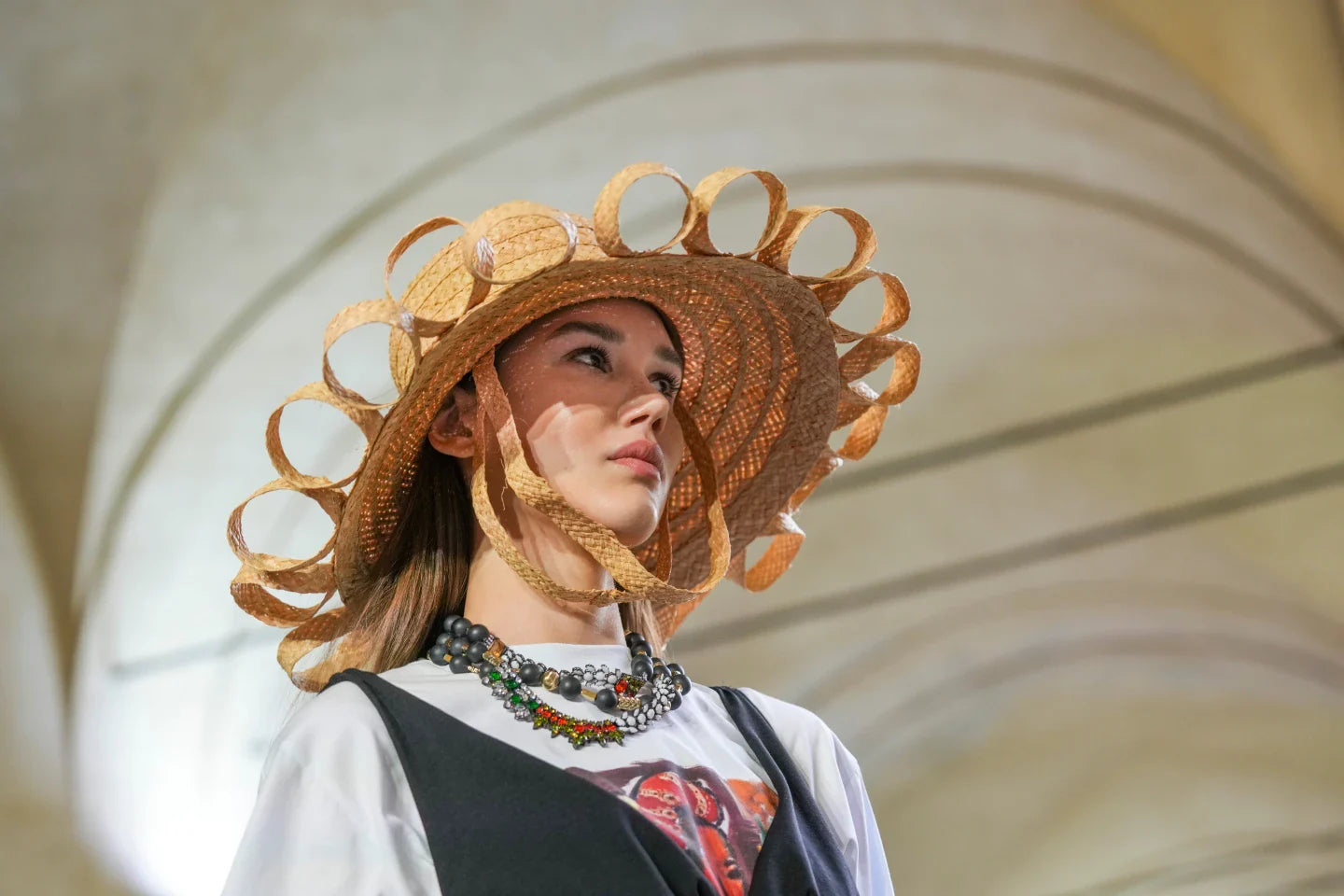
Jean’s latest collection is a masterclass in cross-cultural exchange. Partnering with artisans from Bhutan, she fused Italian tailoring with Bhutanese textiles, creating garments that are as much cultural artefacts as they are fashion statements. Among the standout pieces:
- Traditional handwoven tego jackets: Layered over silk printed dresses, these pieces balance Bhutanese heritage with Jean’s signature silhouette.
- Embroidered nettle fiber skirts: Intricate needlework transforms humble fibers into high fashion, highlighting the meticulous labor behind every garment.
- Skirts paired with rugby shirts: A playful juxtaposition of traditional handwork and modern athleticism.
- Silken dress with beaded village scene panel: Artistry and storytelling blend seamlessly, the beadwork depicting a slice of Bhutanese life.
For Jean, these collaborations are more than aesthetic choices. They are acts of preservation, ensuring that endangered techniques and traditions survive in a world obsessed with speed and scale.
The Crisis in Italian Craftsmanship

Yet for all her global focus, Jean is deeply concerned about the state of Italian craftsmanship. “Italian craftsmanship is dying out,” she warned, pointing to a generational crisis: fewer young people are choosing the trades that once defined the country’s fashion supremacy. The decline is palpable, threatening not just the luxury market’s cachet, but the very soul of Italian design.
Jean’s solution is both pragmatic and visionary. She has called on Italian lawmakers to extend the same fiscal privileges to fine craftsmanship that artworks now enjoy. Specifically, she advocates for lower value-added tax (VAT) on artisan-made garments. “We can’t pay them less because the artisans are already not being paid much,” Jean asserted. The tax break would make it feasible for consumers to invest in pieces that may take up to a year to create—such as the Bhutanese ankle-length kira she wore on the runway—without eroding the already meager wages of the artisans themselves.
Why Artisans Matter: Beyond Luxury, Toward Legacy

The urgency of Jean’s appeal cannot be overstated. Luxury fashion’s edge has always rested on the shoulders of artisans—those who weave, embroider, and tailor with a mastery that machines cannot replicate. These crafts are more than commercial assets; they are repositories of identity, storytelling, and cross-generational wisdom.
If support wanes, Jean warns, “we will see this craftsmanship only in museums. If we don’t wear it, it is useless.” The implication is clear: the future of fashion is not just about what is new, but what is preserved and passed down. True luxury is not ephemeral; it is enduring, rooted in the hands and traditions that created it.
The Runway as Stage—and Statement
Jean’s Milan show was as much a celebration as it was a protest. Her front-row VIPs were not celebrities, but the Bhutanese artisans themselves, resplendent in traditional garb—a radical subversion of runway norms that placed the makers, rather than the wearers, at the heart of the event. This gesture underscored Jean’s commitment to elevating the voices and faces behind the garments.
Backstage, Jean worked with the artisans, adjusting hems and applying finishing touches—a living testament to the collaborative process. The runway was not just a showcase of fashion, but a living workshop, a bridge between continents and generations.
A Tribute to Giorgio Armani: Roots and Reverence

No account of Jean’s Milan trajectory would be complete without acknowledging her debt to Giorgio Armani. Her runway debut in 2013 at the Armani Theater was a landmark moment, granted by the legendary designer himself. This season, Jean paid homage with a symbolic gesture—unfurling the T-shirt she wore for her Milan premiere, inscribed with: “Grazie, Mr. Armani, signed Stella.”
“We cannot be here without paying a tribute, which is also a sign of respect to someone to whom I am not alone in owing a debt,” Jean reflected. In her eyes, Armani was the architect of Italian fashion’s global ascendancy, an exemplar of the very values—quality, vision, and respect for craft—that she now seeks to defend.
Political Action and the Future of Fashion
The policy challenge Jean has raised is both timely and complex. If lawmakers heed her call, the implications could be transformative: a new era in which investment in artisan-made fashion is not just a moral choice, but an economically accessible one. The potential ripple effects are vast:
- Preservation of endangered crafts and techniques.
- Greater financial security and recognition for artisans.
- Strengthening of Italy’s reputation as the world’s preeminent fashion capital.
- Encouragement for younger generations to enter the trade, reversing a troubling trend.
Jean’s advocacy positions her not just as a designer, but as a catalyst for change—someone who understands that the future of fashion depends on the political will to support its foundation.
The Emotional Resonance: Fashion as Cultural Activism
At its core, Jean’s return is an act of cultural activism. Her work champions the notion that fashion is not simply a consumer good, but a living archive of human ingenuity and diversity. The pieces she presented—whether Bhutanese kira or Italian-tailored jackets—are vessels of stories, relationships, and traditions that resist commodification.
This philosophy is reflected in her runway staging, her choice of collaborators, and her passionate backstage advocacy. Jean’s message is clear: the fashion industry must evolve, not just in style, but in substance, politics, and values.
Conclusion: Wearing the Future, Honoring the Past
Stella Jean’s Milan comeback is more than a personal milestone—it’s a clarion call for the global fashion community. The preservation of craftsmanship, the elevation of artisans, and the demand for policy change form an agenda that is as urgent as it is inspiring. In a world where speed and novelty threaten to eclipse legacy and meaning, Jean’s work insists that we wear our history proudly and invest in the hands that shape it.
If her appeal is heard, the future of luxury fashion may yet remain rooted in the mastery of its artisans, not just as a nod to the past, but as a living promise for generations to come.