On the November 2025 cover of Vogue, Greta Lee stands at the intersection of cultural resonance and industry transformation. Photographed by Tyler Mitchell and styled by Malina Joseph Gilchrist, Lee’s feature arrives not merely as a portrait of success but as a timely meditation on the evolving nature of female agency in Hollywood. With her much-anticipated role in TRON: ARES sharpening public focus, Lee’s candid reflections challenge entrenched narratives of midlife decline—offering instead a vision of ascent, authenticity, and deliberate resistance to commodification.
Hollywood’s Age-Old Dilemma: Greta Lee’s Defiant Ascent
For decades, women in Hollywood have been confronted by the persistent myth that career longevity is a privilege reserved for youth. The industry’s unwritten rules often dictate that, as women approach their 40s, opportunities dwindle and visibility fades. Lee addresses this head-on, remarking, “Thank God it’s so different from what I imagined this career could be at this point.” Her words are a pointed rebuttal to the limiting wisdom that midlife signals a professional decline—an assertion grounded in both experience and observation.
Lee’s current trajectory defies convention. Instead of plateauing, her career is experiencing a dynamic surge, underscored by the prominent platform Vogue provides. The timing—the lead-up to her starring role in a major blockbuster—amplifies the message: the era of artificial expiration dates for women in entertainment is waning, replaced by a new paradigm that values depth, versatility, and resilience.
Success and Its Psychological Shadows
With the glare of success comes a complex set of psychological challenges. Lee’s insights into the isolating effects of fame are strikingly transparent: “Everything is set up so that the more success you have, the more isolated you become. What happens is—and I have seen this with peers—you get a little weird. You start thinking about yourself in an industry way. You become a product. I hate that, and I can see why it’s crazy-making and really damaging.”
This admission reveals the double-edged sword of visibility. Lee’s rise has not been accompanied by the expected comfort of greater belonging, but by a heightened sense of isolation—a phenomenon she observes in herself and her peers. The commodification of identity, the transformation from person to “product,” is a psychological toll rarely discussed with such candor. Lee’s refusal to be subsumed by this process is at the heart of her current ethos, and it is this resistance that defines her public persona.
Authenticity Over Commodification: A New Hollywood Ethos
Lee’s feature in Vogue is not merely a celebration of personal triumph but an explicit rejection of the industry’s tendency to commodify talent. While fame often exerts pressure to conform, Lee “doesn’t want to compromise”—a stance she has articulated in both this feature and surrounding coverage. This is not an empty slogan, but a guiding principle that shapes her choices, from the projects she selects to the manner in which she navigates press and public scrutiny.
Her approach is radical in its simplicity: remain authentic, resist being reduced to a marketable asset, and make deliberate decisions even when the stakes are high. In an environment where public image is currency, Lee’s insistence on personal integrity is both a strategy and a statement. It is this ethos—of self-possession and thoughtful boundary-setting—that marks her as a vanguard figure for a new generation of artists.
Navigating Sudden Fame and Deliberate Career Moves
With the imminent release of TRON: ARES, Lee finds herself at the center of a cultural moment. Navigating sudden fame requires a calibrated response: the temptation to accept every opportunity is strong, but Lee’s career has been characterized by discernment. She chooses projects not for their immediate visibility, but for their alignment with her values and long-term vision.
This deliberate approach is especially important as public scrutiny intensifies. The pressures of Hollywood—where success can be as destabilizing as failure—demand a clear sense of self. Lee’s ability to remain grounded amid rising expectations speaks to her resilience and her understanding of the psychological landscape of celebrity. In this, she joins a growing cohort of artists who are rewriting the rules of engagement with fame, prioritizing mental health and authenticity over mere exposure.
Visual Storytelling: Fashion as Identity and Power
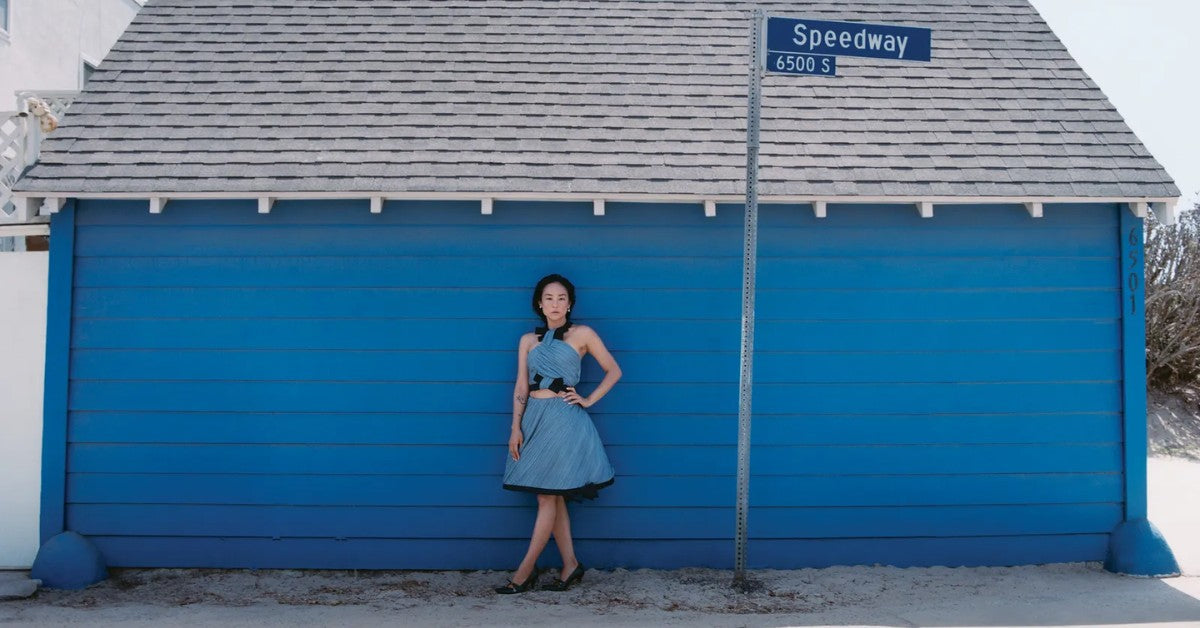
The visual language of Lee’s Vogue feature is as intentional as her words. Under the creative direction of Tyler Mitchell, whose photography is synonymous with modern storytelling, and the styling of Malina Joseph Gilchrist, Lee’s cover and editorial looks are layered with meaning.
- Cover Look: Dior Homme Coat, Jacket, Shirt, and Pants
- Image 1: Dior Top, Skirt, Shoes; Tiffany & Co. Earrings
- Image 2: Erdem Dress
These choices are not arbitrary. Dior Homme’s tailored sophistication evokes strength and timelessness—a subtle nod to Lee’s enduring presence. The pairing of Dior and Tiffany & Co. signals a convergence of tradition and modernity, while the Erdem dress adds a note of romanticism and artistic flair. Each ensemble is a statement, reinforcing Lee’s refusal to be confined by expectation and her embrace of multidimensionality.
Behind the Lens: The Team Crafting Lee’s Narrative
The collaborative force behind the feature is as noteworthy as its subject. Tyler Mitchell, known for his groundbreaking work in fashion photography, brings a nuanced sensitivity to Lee’s portrayal. His lens captures not only physical presence but the emotional and psychological layers that define Lee’s current chapter.
Malina Joseph Gilchrist’s styling amplifies this narrative, selecting looks that resonate with Lee’s ethos of authenticity and strength. The editorial, written by Lisa Wong Macabasco, weaves these elements into a coherent story—one that is both visually arresting and intellectually engaging.
The November 2025 issue, available nationwide from October 21, 2025, is poised to be more than a seasonal marker; it is a cultural document, chronicling a pivotal moment in the evolution of Hollywood’s standards and the redefinition of female power.
The Larger Implications: Greta Lee’s Legacy in the Making
Lee’s feature is emblematic of a broader shift in entertainment: the reclamation of narrative by women at every stage of their careers. Her openness about the psychological impact of success, her refusal to be commodified, and her insistence on authenticity challenge the industry’s most persistent dogmas.
As Lee steps into a new phase—where influence is measured not by age but by agency—she joins a movement that is remaking Hollywood from the inside out. The implications extend beyond the screen and the page, offering a template for survival, success, and self-definition in an age of relentless visibility.
Conclusion: Greta Lee’s Enduring Influence
Greta Lee’s November 2025 Vogue cover is more than a career milestone—it is a manifesto for a generation of women determined to rewrite the rules. By confronting isolation, resisting commodification, and championing authenticity, Lee sets a new standard for what it means to succeed in Hollywood. Her journey invites us to consider not only the future of female representation but the very nature of success itself: multidimensional, self-defined, and open to reinvention at any stage. As the issue arrives on newsstands, it delivers a clear message—midlife in Hollywood is no longer a curtain call, but a platform for power and possibility.