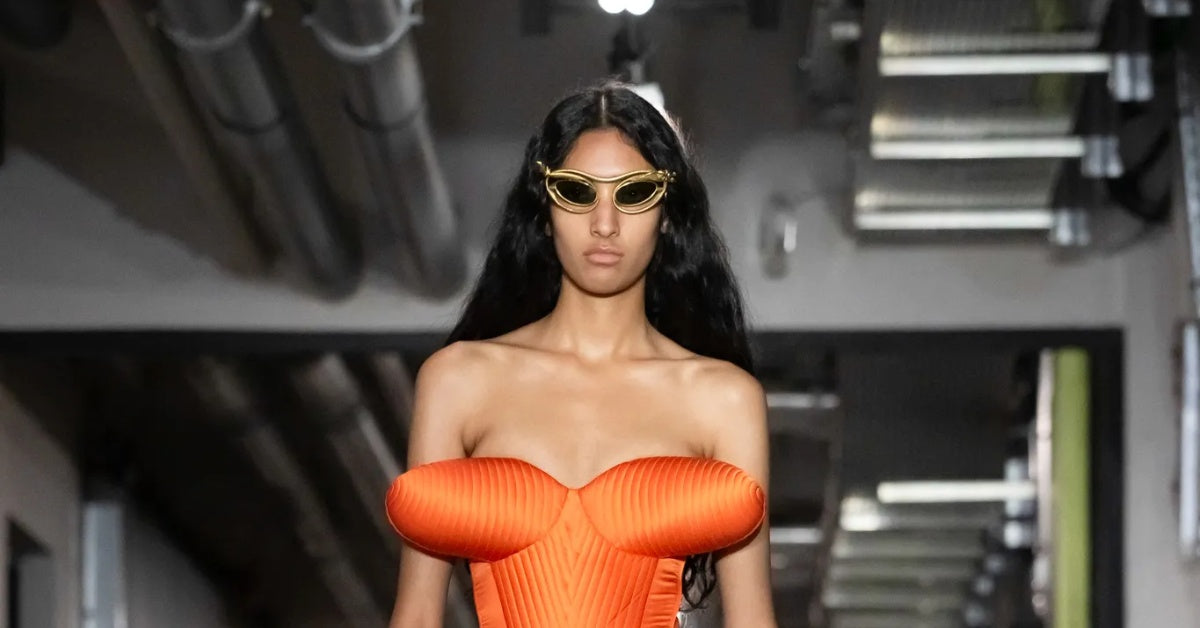
Paris Fashion Week is no stranger to spectacle, but few moments have resonated with as much thoughtful provocation as Duran Lantink’s debut for Jean Paul Gaultier Spring/Summer 2026. The Dutch designer’s appointment marked a decisive break from the archival obsessions that have dominated the industry, ushering in a wave of reinterpretation grounded in personal memory. In a season defined by relentless innovation, Lantink’s collection stood out not for viral theatrics, but for its audacious spirit and intelligent subversion of house codes.
Breaking the Chains of Nostalgia: A New Approach to Heritage

In recent years, fashion’s fixation with the past has produced a carousel of literal references and coded tributes. Lantink, however, charted a bold course for Jean Paul Gaultier, eschewing the typical reverence for archival minutiae in favor of personal recollection and lived experience. This approach injected an authentic energy into the collection, liberating the brand’s storied heritage from the shackles of nostalgia.
Rather than mining the archives, Lantink chose to channel the Gaultier essence—its irreverence, its playful gender fluidity, its fearless embrace of the unconventional—through his own lens. The result was a collection that felt both deeply rooted and radically fresh, an unmistakable evolution rather than a mere homage.
Duran Lantink: The Maverick Behind the Vision
Few designers have arrived at the helm of a heritage house with as much avant-garde credibility as Duran Lantink. Shortlisted for the coveted LVMH Prize in 2019 and winner of the Karl Lagerfeld LVMH Prize in 2020, Lantink has built a reputation for provocative, gender-focused design. His past work—including the infamous torso tops swapped on male and female models—challenged conventions and blurred boundaries, signaling a new era for the Jean Paul Gaultier brand.
Lantink’s appointment was not merely a gesture toward contemporary relevance. It was a deliberate investment in a designer whose creative restlessness and commitment to gender exploration aligned perfectly with Gaultier’s legacy of nonconformity. The Spring/Summer 2026 show was his first as creative director, and the industry watched with anticipation as he brought his signature vision to the runway.

The Setting: Industrial Subterranean Drama
The choice of venue—a raw, industrial subterranean corridor beneath the Musée du quai Branly — Jacques Chirac—was a masterstroke. The stark setting provided a dramatic counterpoint to the collection’s exuberance, emphasizing the tension between history and reinvention. After several seasons of haute couture guest designers, this marked Gaultier’s much-anticipated return to ready-to-wear, and the atmosphere crackled with expectation.
While the show avoided headline-grabbing stunts, its energy was palpable. Lantink’s thoughtful provocations were embedded in every look, maintaining the brand’s reputation for challenging norms while sidestepping the pitfalls of empty spectacle.

Provocative Details: Signatures and Subversions
If Gaultier’s heritage is defined by cheeky audacity, Lantink’s debut elevated that legacy to new heights. The runway was a study in gender disruption and visual wit:
- Women strutted in bodysuits emblazoned with photorealistic prints of men’s hairy torsos, legs, and private parts—an irreverent swap that played with perceptions of identity and sexuality.
- Men wore thong bodysuits that dramatically inflated, transforming into bomber jackets mid-stride—a clever inversion of masculinity and garment utility.
- Padded, sci-fi superheroine bras and knickers shimmered in gold sequins, merging fantasy with empowerment in a distinctly Gaultier vein.
Each look was a pointed statement, asking not just what fashion can be, but who it can serve and how it can surprise. The absence of viral moments was telling: this was a collection built for lasting impact, not fleeting digital fame.

Reinterpreting the House Codes: Inventiveness over Imitation
Lantink’s true genius lay in his ability to reference Gaultier’s iconic signatures without descending into mere replication. The collection was rich with inventive nods to the brand’s most recognizable motifs:
- The legendary sailor was recast as a skewed white naval jacket, paired with a whimsical paper boat hat—a playful yet sophisticated update.
- Tattoo prints, long synonymous with Gaultier, appeared as ancient tribal tufting on tulle, a tactile reimagining that hinted at global influences while remaining distinctly Parisian.
- The bomber jacket—ubiquitous in streetwear—was exaggerated to almost armor-like proportions, transforming a staple into a statement of strength and protection.
These choices reflected a refusal to settle for easy nostalgia. Instead, Lantink’s reinterpretations honored the past while propelling the brand into uncharted territory. The presence of Jean Paul Gaultier himself in the front row underscored the moment’s significance—a passing of the torch not in name, but in spirit.

Reinvigorating Paris Fashion Week: Energy and Attitude
In a season where many houses retreated into the safety of familiar tropes, Lantink injected a vital energy into Paris Fashion Week. His show was a reminder that the future of fashion lies not in obsessive references, but in fearless reinvention. The audience, attuned to the subtleties of creative leadership, recognized Lantink’s stewardship as an act of innovation rather than mere preservation.
The collection’s emphasis on reinterpretation over nostalgia resonated powerfully, offering a blueprint for other heritage brands grappling with the question of relevance in a rapidly shifting landscape. Lantink’s approach suggests that the most effective way to honor a legacy is to challenge it—to reinterpret its spirit for a new era, rather than calcifying it in the amber of the past.

The Commercial Challenge: From Runway to Retail
Yet, as every seasoned editor knows, the true test of a collection is not its impact on the runway, but its performance on the shop floor. The challenge now facing Jean Paul Gaultier and Lantink is how to translate theatrical showmanship and avant-garde attitude into commercial success.
The collection’s intelligent provocation and inventive silhouettes have the potential to captivate a new generation of consumers—but only if the brand can bridge the gap between runway artistry and retail desirability. This tension has long haunted fashion’s avant-garde, and it remains to be seen whether Lantink’s vision will reshape the commercial fortunes of Jean Paul Gaultier in the seasons to come.

Conclusion: A New Chapter for Jean Paul Gaultier
Duran Lantink’s Spring/Summer 2026 debut was far more than a collection; it was a manifesto for the future of Jean Paul Gaultier. By rejecting nostalgia and embracing reinterpretation, Lantink has positioned the house at the forefront of contemporary fashion dialogue. His stewardship promises not only to honor Gaultier’s legacy, but to expand it—challenging the industry to think beyond codes and archives, and to imagine what heritage can become when filtered through the lens of personal memory and fearless invention.
As the fashion world looks ahead, one question remains: Will this new energy translate into lasting success? If the runway is any indication, Jean Paul Gaultier’s next chapter has only just begun, and it promises to be as provocative and unpredictable as ever.