Explore with AI & Follow Us
Introduction: When Fashion Crosses the Line
In the ever-evolving world of celebrity fashion, boundaries are constantly pushed and redefined. Yet, some moments ignite debates that transcend style and enter the realm of legality and public morality. Bianca Censori, the architect and model known for her connection to Kanye West, recently found herself at the epicenter of such a controversy. Her decision to appear nearly naked in public has sparked not only viral headlines but also calls for her arrest—a rare intersection between personal expression, the law, and the court of public opinion.
The Incident That Sparked Outrage
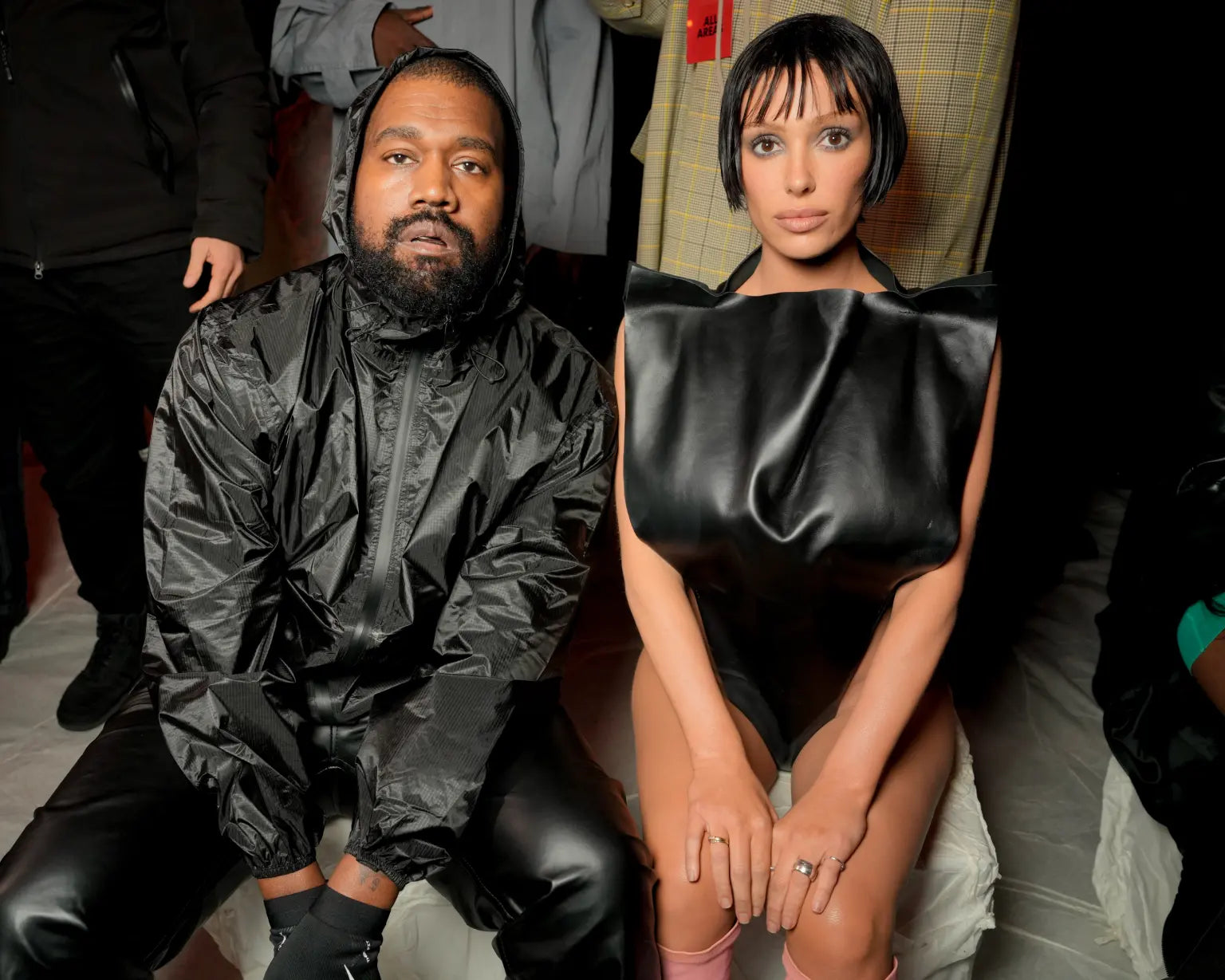
On May 27, 2025, reports surfaced detailing Bianca Censori’s latest public appearance in which she was seen wearing an outfit that left little, if anything, to the imagination. This was not her first foray into daring fashion, but the sheer audacity of her latest look—described by many as “naked in public”—drew an immediate reaction. The spectacle quickly sparked outrage on social media, with some users demanding legal action against the model for alleged public indecency.
Such calls for arrest are rare in the world of celebrity fashion, where risqué outfits are often celebrated as statements of empowerment and artistic freedom. However, Censori’s appearance appears to have crossed an invisible line for many, igniting a heated debate about the limits of self-expression in public spaces.


The Legacy of Provocative Fashion
Bianca Censori is far from the first celebrity to challenge societal norms through clothing—or the lack thereof. From Madonna’s controversial outfits in the 1980s to Lady Gaga’s infamous meat dress, the fashion world has long been a stage for rebellion and reinvention. These moments are often seen as a reflection of cultural shifts, with celebrities serving as lightning rods for broader conversations about gender, sexuality, and freedom.
But what makes Censori’s case unique is the intensity of the public response, amplified by the near-instantaneous spread of images and opinions online. In an era where every move is documented and dissected, the boundaries of fashion are not just tested on runways, but in the streets—and in the courts of public opinion.
Public Reaction: Outrage, Support, and the Role of Social Media
The reaction to Bianca Censori’s appearance has been polarized. On one side, critics argue that her actions constitute public indecency and set a dangerous precedent. They claim that her celebrity status should not exempt her from the rules that govern public behavior, and some have gone so far as to demand her arrest.
On the other side, supporters defend Censori’s right to self-expression, viewing her as a trailblazer who refuses to conform to outdated norms. They argue that fashion is inherently subjective and that society should embrace, rather than police, boundary-pushing creativity.
- Critics: Argue for legal action, citing public decency laws.
- Supporters: Defend her as an artist and symbol of freedom.
- Observers: Question where the line should be drawn between personal freedom and public responsibility.
Social media platforms like Instagram and X (formerly Twitter) have amplified these voices, turning Censori’s fashion choice into a global conversation. Hashtags calling for her arrest trended alongside those celebrating her audacity, highlighting the divided nature of the debate.
The Legal Dimension: Where Does the Law Stand?
One of the most complex aspects of this controversy is the legal question: Did Bianca Censori break the law? Public indecency laws vary greatly by jurisdiction, but they generally prohibit acts that are considered offensive or lewd in public spaces. These laws are often open to interpretation and can be influenced by local cultural norms.
In many cases, celebrities have skirted the edges of these laws without facing legal consequences, often due to subjective enforcement or the ambiguity of what constitutes “indecency.” However, calls for Censori’s arrest reflect a growing impatience with what some see as a double standard for celebrities versus ordinary citizens.
Legal experts note that any prosecution would depend on whether her outfit exposed areas of the body deemed illegal to show in public under the relevant statutes. In practice, such cases are rare and often hinge on public complaints and the discretion of law enforcement.
Fashion as Protest and Performance Art
To understand the roots of this controversy, it’s important to recognize that fashion has always been a form of protest and performance art. From the flappers of the 1920s to the punk rockers of the 1970s, clothing has served as a powerful tool for challenging the status quo.
Bianca Censori’s approach echoes this tradition, using her body as a canvas and her clothing—or lack thereof—as a statement. In this sense, her appearance is less about shock value and more about sparking dialogue, whether about body positivity, the male gaze, or the right to self-expression.
But unlike past eras, today’s provocations are played out in real time, with millions of onlookers weighing in from behind their screens. The stakes—and the scrutiny—have never been higher.
The Celebrity Factor: Fame and Accountability
One reason Censori’s actions attract such intense attention is her celebrity status. As a public figure, she exists in a space where personal choices are magnified, scrutinized, and often politicized. This raises important questions:
- Should celebrities be held to a higher standard because of their influence?
- Or should they be granted more leeway, as artists and cultural innovators?
- How do we balance the right to personal expression with the need for public order?
These are not easy questions to answer, but they are at the heart of the debate swirling around Bianca Censori. Her case serves as a reminder that fame is a double-edged sword, offering both opportunities for expression and heightened responsibility.
The Impact on Fashion and Society
Regardless of where one stands on the issue, there is no denying that Bianca Censori’s choices have had an impact. By challenging conventions, she has forced a conversation about the evolving nature of fashion, the limits of personal freedom, and the role of celebrities in shaping cultural norms.
For the fashion industry, her actions are both a challenge and an inspiration. Designers, stylists, and models are constantly navigating the tension between innovation and acceptability. Censori’s boldness may encourage others to push boundaries, but it also raises questions about the potential backlash and real-world consequences.
For society at large, the incident is a mirror, reflecting our own anxieties and aspirations. It forces us to ask: What do we value in public spaces? How do we define decency, and who gets to decide? In an increasingly connected world, these questions are more relevant than ever.


Conclusion: The Fine Line Between Freedom and Responsibility
As the dust settles on the latest Bianca Censori fashion controversy, one thing is clear: the debate is far from over. Whether seen as an act of liberation or a step too far, her actions have reignited a crucial conversation about the boundaries of self-expression.
Fashion will always be a site of experimentation and rebellion. But as society grapples with changing norms and the power of celebrity, the line between freedom and responsibility grows ever thinner. For Bianca Censori and the millions watching, that line may never be entirely clear—but the conversation it inspires is here to stay.
What do you think—is Bianca Censori pushing fashion forward, or crossing a line that shouldn’t be crossed?
Explore with AI & Follow Us